Missing teeth affect more than your oral health — they can impact your confidence and daily life. Do you cover your mouth when you laugh or avoid photos? Dental implants restore not only your smile and chewing ability but also your self-assurance, so you can enjoy life without hesitation.
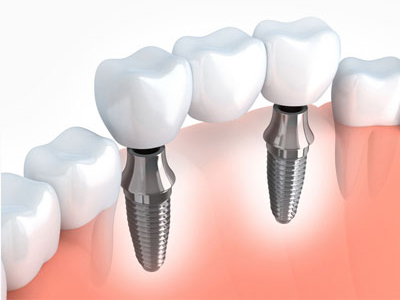
- How Implants work: Implants are screws that are placed securely in the jawbone. This now acts as a root for the artificial crown, helping maintain bone health while looking and feeling just like natural teeth.
- At Clove Dental: We combine advanced 3D planning with expert care to make the process smooth, comfortable, and built for long-term success. Your treatment is safe, predictable, and designed around your needs.
Who Can Benefit from Dental Implants
Implants may be right for you if you have one, few or all missing teeth & are looking for a fixed treatment for replacement.
If this sounds like you, our team at Clove Dental can guide you through every step.
Types of Dental Implants
| Type of Implant |
Description |
| Single Tooth Implant |
Replaces one missing tooth in a fixed and secure way. |
| Multiple Implants |
Restore several teeth while maintaining chewing function and jaw health. |
| All-on-4 Implants |
Full-arch restoration using just 4 implants, often completed in a few days. |
| All-on-6 / All-on-8 Implants |
Strong support for full-mouth reconstruction, ideal for multiple missing teeth. |
| Zygomatic / Pterygoid Implants |
Anchored in the cheekbone for patients with limited upper jaw bone. |
| Basal Implants |
Quick, minimally invasive solution for patients with less bone remaining. |
| Keyhole Implants |
High-precision, minimally invasive placement. |
| Mini Implants |
Smaller implants, great for stabilizing dentures or limited bone. |
| TAD Implants (Orthodontic Mini-Implants) |
Temporary implants used for precise tooth movement during braces or aligners. |
Advantages of Dental Implants
- Permanent, natural-looking replacement for missing teeth
- No damage to the neighboring healthy teeth
- Restores chewing, speaking, and oral function
- Prevents bone loss and maintains facial structure
- Long-lasting durability with proper care
- Suitable for single, multiple, or full-arch restoration, also can be placed on same day of tooth extraction
- Minimally invasive options for faster recovery
DENTAL IMPLANT COST AT CLOVE DENTAL
The cost of dental implants at Clove Dental start from ₹19,900 per implant. The final price depends upon implant type, surgical needs, and the final prosthesis.
Note: The cost of the final crown or bridge and supportive components is not included. Procedures like bone grafting, sinus lift, or ridge augmentation may involve additional charges. Routine treatments like tooth extractions are not part of the implant package.
(Prices as of August 21st, 2025)
Factors That Influence Cost
- Number of implants
- Brand and material of implant
- Condition of your jawbone
- Surgical needs and additional procedures
- Prosthesis type (crown, bridge, or denture)
- Experience of the professional and technology used
At Clove Dental, we combine expert implantologists with advanced 3D planning and guided surgery to deliver high-quality International Grade implants at affordable prices, with flexible payment options like EMIs.
Dental Implants vs. Dentures
| Factor |
Dental Implants |
Removable Dentures |
Bridges (FPD) |
| Stability |
Fixed, feels like natural teeth |
Removable, may slip while eating/speaking |
Fixed, but supported by trimming healthy teeth |
| Comfort |
Very comfortable, no bulkiness |
Can feel bulky, takes time to adjust |
Comfortable, but can stress supporting teeth |
| Bone Health |
Preserves bone and prevents shrinkage |
Bone loss continues under denture |
Does not prevent bone loss at missing tooth site |
| Impact on Other Teeth |
No effect on nearby teeth |
No effect |
Adjacent healthy teeth must be trimmed for support |
| Durability |
Long term, often lifelong |
5–7 years (may need relining/replacement) |
10–15 years, depends on support teeth health |
| Appearance |
Natural-looking, blends seamlessly |
Can look artificial over time |
Blends in well with natural tooth, but may show gum line gaps |
| Maintenance |
Brush & floss like natural teeth |
Must be removed and cleaned daily |
Requires special cleaning under bridge |
| Cost (initial) |
Higher, but long-term value |
Lowest upfront cost |
Moderate |
| Overall Benefit |
Most natural, long-lasting, healthy option |
Affordable, quick replacement |
Fixed but at expense of natural teeth |
Steps of a Dental Implant: What to Expect
Step 1: Consultation & Evaluation
- Thorough examination with 3D scans and Dental X-rays
- Personalized treatment plan tailored to your needs
Step 2: Implant Placement (Minor Surgery)
- Performed under local anesthesia
- Most patients describe it as comfortable and pain-controlled. You can easily go on with your normal day post the 30 minutes procedure.
Step 3: Healing & Osseointegration (Formation of Bone-Implant Junction)
- Implant fuses with jawbone over 2–6 months
- In the meanwhile, temporary crowns or dentures may be provided
Step 4: Crown Placement
- Final crown is attached, restoring natural appearance and function
Step 5: Post-Care & Follow-Up
- Maintain good oral hygiene
- Attend regular check-ups
- Enjoy your restored smile with confidence
Common Myths About Dental Implants
Many people hesitate to get dental implants due to common misconceptions. Let’s bust a few:
A lot of people delay getting dental implants because of what they’ve heard rather than what’s actually true. Let’s clear up some of the biggest myths:
Myth 1: “Implant surgery is very painful.”
Reality: Thanks to modern techniques and local anesthesia, the procedure is usually far more comfortable than people expect. The area is numbed during surgery, and most patients say it feels similar to getting a tooth removed. Mild soreness after is normal but easily manageable.
Myth 2: “Implants are only for older people.”
Reality: Age is not the main factor. What really matters is healthy gums and enough bone to support the implant. Even if bone has shrunk, grafting techniques can make implants possible for many younger and older adults alike.
Myth 3: “Implants don’t look natural.”
Reality: A well-made implant is designed to blend in perfectly. It’s matched in size, shape, and color to your real teeth—so much so that people usually can’t tell which tooth is the implant.
Myth 4: “Implants don’t last long, you’ll need frequent replacements.”
Reality: Dental implants are built to last. With good care, they can serve you for decades—often for life. This makes them a much more stable and cost-effective option compared to bridges or dentures, which need regular adjustments and replacements.
Risks of Dental Implants
The risks associated with dental implants can vary from person to person. Factors such as implant placement accuracy, bone and gum health, presence of infection, oral hygiene, vitamin D levels, systemic conditions like diabetes, and habits like smoking can all influence success.
Despite these variables, dental implants are very safe and highly successful, with success rates above 95%. Minor complications may include infection, swelling, or, in rare cases, implant failure. At Clove Dental, our team minimizes these risks through advanced planning, precise surgical techniques, and comprehensive post-operative care guidance, ensuring your treatment is both safe and predictable.
Long-Term Care & Maintenance of Dental Implants
Dental implants are durable, but they still require care to ensure long-term success and oral health:
- Brush & floss daily – Keep the area around your implant clean to avoid plaque buildup.
- Regular dental check-ups – Professional cleaning and monitoring ensure the implant stays healthy.
- Avoid hard chewing – Biting on ice, pens, or hard candy can damage the crown.
- Quit or limit smoking – Smoking slows healing and increases the risk of implant failure.
Google Reviews
The clinic was spotless, and all tools were sterilized in front of me. I felt very safe and well taken care of. Clove Dental arza square is definitely ahead in cleanliness and patient care.
Had a wonderful experience at Clove Dental Gurgaon. Got an implant done by Dr. Rubi, which was painless and handled with great care. Highly recommend for implants, laser dentistry, and aligners.
Got dental implants at Clove Banashankari 3rd Stage with Dr. Shachi and Dr. Srikanth. The procedure was smooth, EMI options made payments easy, and post-surgery care was excellent.
FREQUENTLY ASKED QUESTIONS
1. Can I get implants if I have diabetes?
Diabetes affects the wound healing in patients so is the fusion of the implant with the bone. But if the blood sugar level is well controlled and the patient’s HbA1c falls less than 6… implants are safe to place and even the outcomes are favourable. The long term success will be depending on sugar monitoring, maintaining oral hygiene and routine follow up visits
Your oral surgeon will likely schedule more frequent follow-up visits to monitor the healing process and ensure proper bone healing occurs.
2. When can I return to work following the implant placement surgery?
You start to feel comfortable doing your daily tasks as soon as the anaesthesia wears off. But we recommend not undertaking any strenuous activities in the 1st 24 hours. Some mild discomfort or swelling generally persists for a few days but it rarely interferes with normal day to day activities.
3. Do dental implants alter facial appearance?
Implants actually help preserve your natural facial structure by maintaining jawbone density. This prevents the collapsed appearance that sometimes develops when teeth are missing for extended periods.
4. How many appointments are required for the implant process?
The treatment typically involves several stages: initial consultation, surgical placement, a healing period, and final restoration placement. every individual has different course of healing; so how wellyout implant and when it will gget get integrated with bone decides the duration . also what kind of final prosthesis is planned over implants also decide the number of visits.
5. Is immediate implant placement possible after extraction?
Under certain circumstances, yes. Your dentist must evaluate bone quality, gum tissue health, and other factors before determining if immediate placement is appropriate for your situation.
6. Are there age restrictions for dental implants?
Adults whose jaw development is complete are generally good candidates. While there’s no maximum age limit, overall health status and healing capacity are more important considerations than chronological age.
7. Can implants replace front teeth effectively?
Yes, implants work exceptionally well for anterior teeth replacement. They restore both cosmetic appearance and proper function while blending naturally with surrounding teeth.
8. How do implants impact speech patterns?
Because implants remain fixed in position, they typically cause fewer speech difficulties than removable prosthetics. Most patients experience improved clarity compared to having gaps or loose-fitting dentures.
9. What about patients who grind their teeth?
Bruxism doesn’t necessarily eliminate you as a candidate, though your dentist may suggest using a protective night appliance to minimize stress on the implant and restoration.
10. Are there eating restrictions with implants?
Initially, a softer diet helps protect the surgical site during healing. Once the implant has integrated fully, you can typically eat the same foods you enjoyed with your natural teeth.
 Medically Reviewed
Last reviewed by Clove Clinical Team on July 19, 2024 | Written by Dr. Shreya Singh, BDS, PGDCC.
Learn More About Dental Implants
Also, learn more about all available dental specialties and treatments at Clove Dental here.
People who viewed this page also visited



 Call us: 9393553232